Understanding Reading Glasses Test Charts (PDF)
Reading glasses test charts‚ often available as PDFs‚ are crucial tools for self-assessment and monitoring vision changes. They aid in determining appropriate magnification
for comfortable reading‚ enhancing comprehension and reducing eye strain through focused practice.
What are Reading Glasses Test Charts?
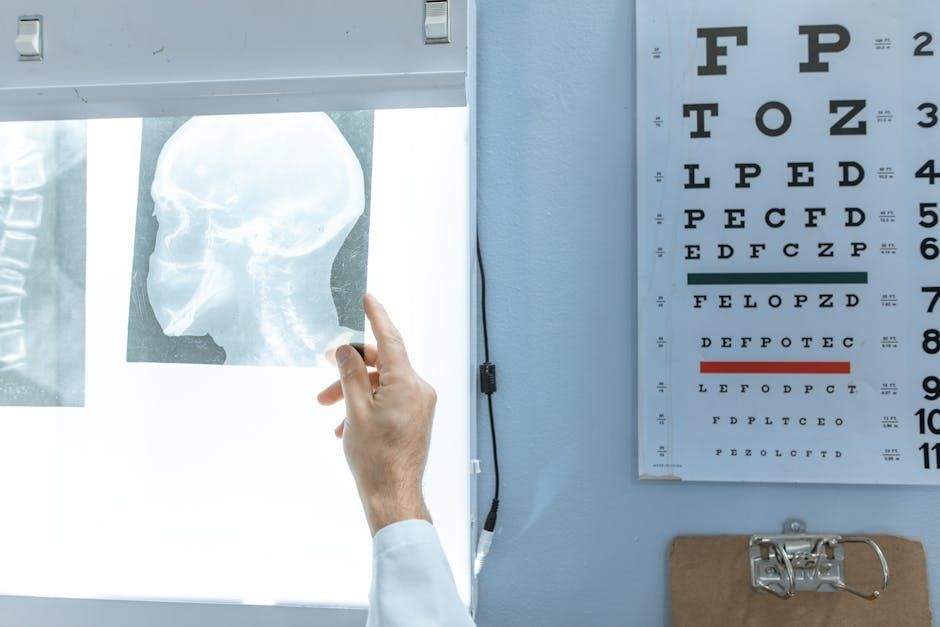
Reading glasses test charts are specifically designed visual aids used to evaluate near vision acuity – how clearly you can see objects up close. Unlike standard distance vision charts (like the Snellen chart used at the eye doctor’s office)‚ these charts feature progressively smaller text sizes intended for reading distances‚ typically around 14-16 inches.
These charts aren’t about diagnosing complex eye conditions; instead‚ they help individuals determine if over-the-counter reading glasses are needed and‚ if so‚ what power (magnification) would be most suitable. They present lines of text‚ and the smallest line you can comfortably read indicates your approximate reading vision.
PDF versions of these charts offer convenience‚ allowing for easy printing and use at home. They are a preliminary screening tool and shouldn’t replace a comprehensive eye exam by a qualified professional. Regular eye exams are vital for overall eye health and detecting potential issues beyond simple refractive error.
Why Use a PDF Test Chart?
Utilizing a PDF reading glasses test chart provides a convenient and accessible initial assessment of your near vision. They eliminate the immediate need for an eye doctor appointment for a simple vision check‚ saving both time and expense. PDF charts are readily available online from various sources‚ offering a quick solution for those experiencing reading difficulties.
The portability of a PDF allows you to print and use the chart anywhere with a printer. This is particularly useful when traveling or if you suspect your vision is changing and want a preliminary check before scheduling an exam. They empower individuals to proactively monitor their vision and understand potential needs.
However‚ remember these charts are screening tools‚ not replacements for professional eye care. They offer a starting point for understanding your vision and determining if further evaluation is necessary. Consistent monitoring with a PDF chart can help track changes over time.
Types of Reading Glasses Test Charts
Various charts assess near vision‚ including standard Snellen variations‚ specialized J-charts (J1‚ J4‚ J7)‚ and dynamic reading charts for comprehensive evaluation.
Standard Snellen Chart Variations
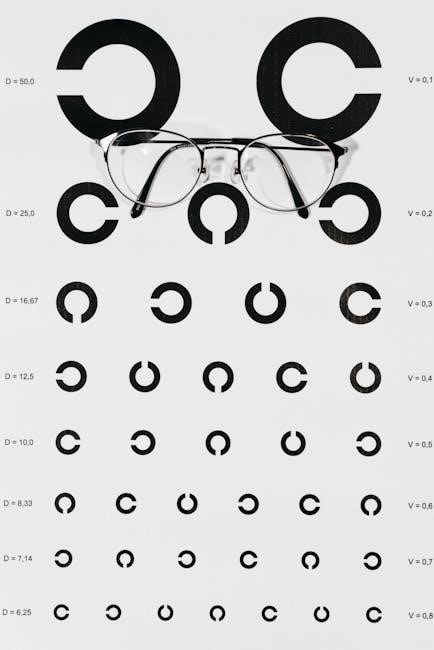
The Snellen chart‚ a cornerstone of vision testing‚ presents rows of progressively smaller letters. While traditionally used for distance vision‚ adaptations exist for near vision assessment‚ crucial when selecting reading glasses. PDF versions often include variations with different letter arrangements and sizes‚ catering to diverse visual acuities.
These charts typically measure visual acuity at 20 feet (or equivalent)‚ but near vision charts are viewed at a standard reading distance – approximately 14-16 inches. Variations may include charts with fewer lines‚ focusing on the range most relevant for reading. Some PDFs offer charts designed for specific age groups or those with pre-existing vision conditions.
Understanding the chart’s notation is key; 20/20 signifies normal vision‚ while 20/40 indicates that an individual can see at 20 feet what someone with normal vision sees at 40 feet. When using a PDF chart‚ ensuring accurate printing and proper lighting is paramount for reliable results.
Near Vision Charts (J1‚ J4‚ J7)
Near vision charts‚ designated as J1‚ J4‚ and J7‚ are specifically designed for assessing reading ability and determining appropriate reading glass power. These charts utilize different sized optotypes – typically letters or shapes – presented at standard reading distances. J1 represents the largest optotype size‚ indicating the lowest level of visual acuity‚ while J7 is the smallest‚ representing the highest.
PDF versions of these charts are readily available‚ offering a convenient method for self-screening. They are particularly useful for individuals experiencing difficulty with close-up tasks like reading or using digital devices. When utilizing a PDF chart‚ maintaining a consistent distance of 14-16 inches from the chart is crucial for accurate assessment.
Interpreting results involves identifying the smallest line the individual can comfortably read. This corresponds to a specific visual acuity measurement‚ guiding the selection of appropriate reading glass magnification. Remember‚ these charts provide a preliminary assessment and should not replace a comprehensive eye exam.
Dynamic Reading Charts
Dynamic reading charts represent a more advanced approach to assessing reading vision‚ moving beyond static optotypes. These charts feature text that changes in size‚ contrast‚ or arrangement‚ simulating the real-world challenges of reading varying materials. PDF versions offer accessibility‚ allowing users to self-assess reading performance under different simulated conditions.
Unlike standard charts‚ dynamic charts evaluate how well the eyes track and maintain focus during reading‚ identifying issues like saccadic dysfunction or accommodative instability. They can reveal subtle vision problems not detected by traditional tests. Utilizing a PDF version requires careful attention to screen settings – brightness and contrast are vital for accurate results.
These charts are beneficial for individuals experiencing reading fatigue‚ headaches‚ or difficulty with comprehension. While helpful for self-monitoring‚ dynamic reading chart results should always be discussed with an eye care professional for a complete diagnosis and personalized treatment plan.
Accessing and Using PDF Charts
PDF reading glasses test charts are readily available online from reputable sources; proper printing and consistent lighting are essential for reliable self-assessment results.
Finding Reliable PDF Sources
Locating trustworthy PDF reading glasses test charts requires careful consideration. Optometry practices and vision care websites frequently offer downloadable charts designed for preliminary self-screening. However‚ exercise caution when sourcing charts from unfamiliar websites‚ as accuracy isn’t always guaranteed. Look for charts originating from established eye care professionals or organizations dedicated to vision health.
Government health websites and educational institutions are also excellent sources for reliable materials. Before using any chart‚ verify its origin and ensure it appears professionally designed and clearly legible. Avoid charts with watermarks or signs of alteration. Remember‚ these charts are intended for initial assessment only and should not replace a comprehensive eye exam conducted by a qualified eye care professional. Utilizing a reputable source ensures a more accurate self-assessment and helps avoid potential misinterpretations of your visual acuity.
Printing Considerations for Accuracy
Achieving accurate results with a PDF reading glasses test chart hinges on precise printing. Ensure your printer is functioning correctly and utilizes a standard paper size – typically 8.5 x 11 inches (US Letter). Select the “actual size” or “100% scale” printing option within your printer settings to prevent any scaling or compression of the chart. Avoid using “fit to page” as this will distort the measurements and invalidate the test.
Employ a high-quality print setting for sharp‚ clear lines and lettering. A laser printer generally produces more precise results than an inkjet printer‚ but either can be used if properly calibrated. After printing‚ carefully measure the top line of letters to confirm it matches the stated size on the chart. Any deviation from the specified dimensions compromises the test’s validity. Consistent printing practices are vital for reliable self-assessment.
Proper Lighting and Distance
Optimal testing conditions are paramount when utilizing a PDF reading glasses test chart. Ensure the testing area is well-lit with a consistent‚ glare-free light source. Avoid direct sunlight or harsh overhead lighting‚ as these can distort your perception. A neutral‚ diffused light is ideal‚ mimicking typical reading environments.
Maintain a consistent distance of 14-16 inches (approximately 35-40 centimeters) between your eyes and the printed chart – this replicates standard reading distance. Secure the chart to a wall or flat surface at eye level. During the test‚ cover one eye at a time‚ focusing on the smallest line of text you can clearly discern. Consistent distance and lighting are crucial for obtaining accurate and reliable results‚ mirroring real-world reading scenarios.

Interpreting Test Chart Results
Analyzing your performance on a PDF chart reveals visual acuity levels. Identifying the smallest readable line indicates your reading vision‚ helping determine appropriate lens power.
Understanding Visual Acuity Measurements
Visual acuity‚ measured on reading glasses test charts‚ expresses the clarity of your vision at a specific distance – typically 14 to 16 inches for near vision. It’s often represented as a fraction‚ like 20/20‚ 20/30‚ or 20/40. The first number (20) signifies the standard viewing distance in feet.

The second number indicates the smallest line you can read from 20 feet that a person with normal vision should be able to read. For example‚ 20/40 means you can read at 20 feet what someone with 20/20 vision can read at 40 feet. Lower acuity (e.g.‚ 20/60) suggests more significant vision impairment.
When using a PDF chart‚ measurements are often expressed using J-numbers (J1‚ J4‚ J7)‚ where lower numbers denote larger print and better readability. Understanding these measurements helps gauge the effectiveness of your reading glasses and track any changes in your vision over time. Consistent monitoring is key to maintaining optimal visual comfort.
Identifying Common Vision Problems
Reading glasses test charts (PDF versions included) can offer clues about potential vision issues‚ though they aren’t a substitute for a professional exam. Difficulty reading smaller print may indicate presbyopia‚ the age-related loss of near focusing ability – a common reason for needing reading glasses.
Blurry vision at all distances‚ or distorted images‚ could suggest refractive errors like nearsightedness‚ farsightedness‚ or astigmatism. If lines appear wavy or broken‚ or if you experience double vision‚ it’s crucial to consult an eye care professional.
Using a PDF chart‚ consistently struggling with specific letters or lines‚ or noticing a significant difference between your eyes‚ warrants further investigation. These charts help pinpoint potential problems‚ prompting timely professional evaluation for accurate diagnosis and appropriate corrective measures. Early detection is vital for preserving optimal vision.
When to Consult an Eye Care Professional
While PDF reading glasses test charts are useful for initial self-assessment‚ they cannot replace a comprehensive eye exam. Schedule an appointment if you experience sudden vision changes‚ persistent blurry vision‚ or eye pain.
If you consistently struggle with the chart despite adjusting lighting and distance‚ or if one eye performs significantly worse than the other‚ professional evaluation is essential. Don’t self-diagnose or rely solely on the chart for long-term vision care.
Regular eye exams are crucial‚ even without noticeable problems‚ to detect underlying conditions like glaucoma or macular degeneration. A professional can accurately assess your visual acuity‚ eye health‚ and provide personalized recommendations. Ignoring potential issues can lead to worsening vision and complications; prioritize proactive eye care.
Advanced Features in Modern Charts
Modern PDF charts incorporate features like adjustable font sizes and color contrast options‚ improving accessibility and catering to diverse visual needs for better self-testing.
Color Contrast and Accessibility
PDF reading glasses test charts are increasingly designed with accessibility in mind‚ recognizing that visual impairments extend beyond simple refractive errors. High color contrast between the letters and the background is paramount‚ particularly for individuals with conditions like cataracts or macular degeneration‚ where diminished contrast sensitivity is common.
Charts utilizing black text on a white background‚ or vice versa‚ are generally preferred‚ though variations offering alternative color schemes (e.g.‚ yellow on black) can be beneficial for those with specific sensitivities.
Furthermore‚ modern charts often feature larger font sizes and clearer letterforms to aid readability. The availability of digital PDF formats allows for customization – users can adjust brightness and contrast settings on their devices to optimize the chart for their individual needs.
This focus on accessibility ensures that a wider range of individuals can effectively utilize these charts for self-monitoring and preliminary vision assessment‚ promoting proactive eye health management.
Digital vs. Printed Charts
PDF reading glasses test charts present a choice: digital or printed use‚ each with distinct advantages. Digital charts‚ viewed on smartphones‚ tablets‚ or computers‚ offer scalability – users can easily adjust the size and contrast to suit their needs‚ enhancing accessibility. They eliminate printing costs and reduce paper waste‚ offering an environmentally friendly option.
However‚ printed charts provide a consistent‚ glare-free testing environment‚ independent of screen quality or device settings. The tactile nature of a printed chart can be preferable for some‚ and they don’t rely on battery life or digital literacy.
Accuracy is key with both formats; proper printing resolution is vital for printed charts‚ while screen calibration matters for digital versions. Ultimately‚ the best choice depends on individual preferences‚ available resources‚ and the desired level of customization.
Self-Assessment Limitations
Utilizing PDF reading glasses test charts for self-assessment offers convenience‚ but it’s crucial to acknowledge inherent limitations. These charts are not substitutes for comprehensive eye exams conducted by qualified professionals. Self-tests primarily assess visual acuity for reading distances and cannot detect underlying eye conditions like glaucoma‚ macular degeneration‚ or cataracts.
Accurate results depend heavily on proper technique – consistent lighting‚ correct distance‚ and honest self-reporting are essential. Subjectivity in interpreting chart lines can introduce errors. Furthermore‚ self-assessment doesn’t evaluate binocular vision‚ depth perception‚ or eye muscle coordination.
If discrepancies arise‚ persistent vision changes occur‚ or any eye discomfort is experienced‚ consulting an eye care professional is paramount. A professional evaluation provides a definitive diagnosis and personalized treatment plan.